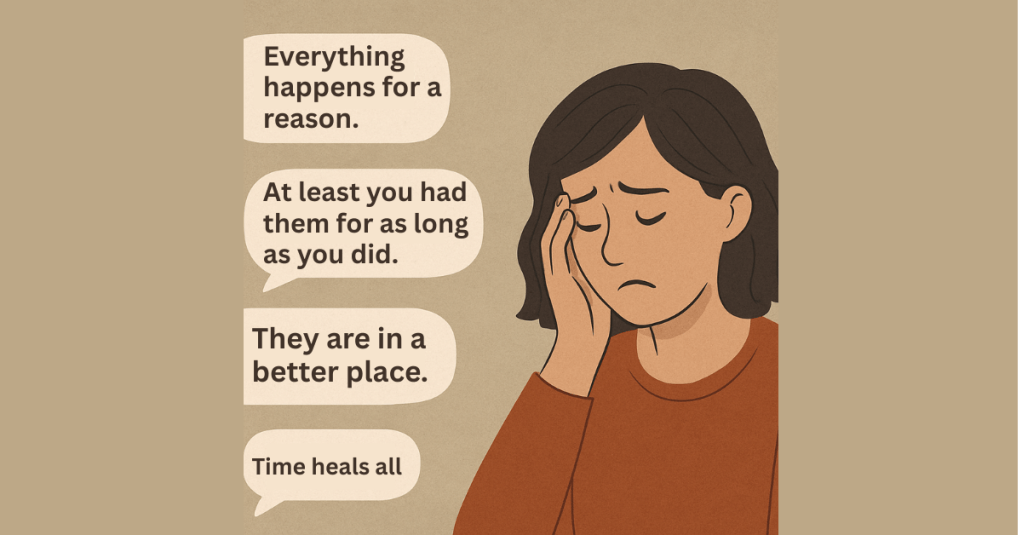
When you’re grieving, the words of those around you can sometimes sting—even when they come from a place of love and care. It’s not uncommon to feel bothered, hurt, or even infuriated by the things people say, especially when your grief is fresh and raw. Those platitudes or unintentional, insensitive remarks often reflect an attempt to comfort or fill the silence, but they can miss the mark and leave you feeling unseen.
Why do people say these things?
Most of the time, these words come from a good place. People want to help but often don’t know what to say. They might be uncomfortable with the depth of your pain, or they might worry about saying the “wrong” thing. Ironically, in their effort to help, they may resort to clichés or overly simplistic phrases that inadvertently diminish your experience.
Here are some examples of common platitudes or unintentionally hurtful remarks:
-
“At least you had them as long as you did.”
-
“Everything happens for a reason.”
-
“Time heals all wounds.”
-
“They’re in a better place.”
-
“He wouldn’t want you to be sad.”
-
“Well, they lived to be 89.”
-
“You’ll move on in time.”
-
“It could be worse.”
-
“God never gives us more than we can handle.”
When grief is new and acute, these statements can feel dismissive, invalidating, or even offensive. You might feel like screaming, “That’s not helpful!” or “You don’t understand how I feel!” And you know what? That’s okay. Feeling angry or frustrated by these remarks is a normal and valid reaction.
What’s behind the frustration?
Your grief is unique, personal, and profound. These one-size-fits-all phrases don’t acknowledge the depth of your pain or the complexity of your loss. They can make you feel like your emotions are being glossed over or dismissed. In a moment when you’re yearning to feel understood and supported, these words can amplify feelings of isolation.
What can we do about it?
-
Acknowledge your feelings. If a comment rubs you the wrong way, it’s okay to feel upset. Let yourself process those emotions without guilt or shame.
-
Remember their intent. Most people aren’t trying to hurt you; they’re trying to help in the best way they know how. Recognizing this might soften the sting, even if the words still don’t sit right.
-
Communicate if you’re comfortable. If you have the energy, gently let someone know how their words affected you. For example, you could say, “I know you’re trying to help, but that comment doesn’t feel supportive right now. What I really need is just someone to listen.”
-
Surround yourself with understanding. Lean on people who allow you to grieve openly and authentically, without judgment or pressure to “move on.”
-
Take care of yourself. If someone’s words stick with you, try journaling, talking to a trusted friend, or engaging in a self-care practice to help process your feelings.
Grief is complicated, and navigating the words of others is just one piece of the journey. If you’ve ever felt bothered or infuriated by a well-meaning remark, know that you’re not alone. It’s okay to feel the way you feel. Your grief deserves to be seen, heard, and honored—on your terms and in your own time.
 Brad McMasters, Grief Educator & Coach
Leave a comment