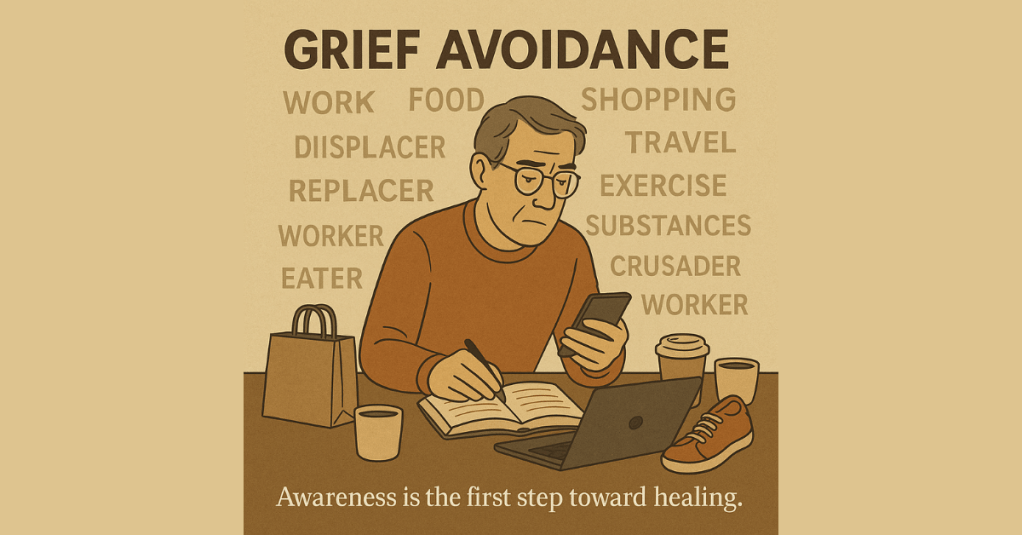
When grief feels overwhelming, we often look for ways to avoid or soften it. These patterns are common, and you may notice yourself in one or more of them. Recognizing your pattern can be the first step toward gently facing your grief in a healthier way.
Displacer
Shifts emotions of grief onto other people or problems.
Example: Snapping at coworkers over small issues.
Replacer
Quickly fills the void of loss with someone or something new.
Example: Adopting a new pet immediately after one dies.
Minimizer
Downplays the significance of the loss.
Example: Saying, ‘At least she lived a long life,’ while avoiding pain.
Somaticizer
Expresses grief through physical symptoms.
Example: Experiencing headaches or stomachaches during grief.
Shopper
Uses buying things for distraction or comfort.
Example: Impulse online shopping sprees after a loss.
Eater
Turns to food for relief.
Example: Late-night binge eating when feeling lonely.
Intellectualizer
Stays in the head instead of the heart.
Example: Researching medical details of the illness instead of grieving.
Traveler
Avoids grief through constant movement or relocation.
Example: Taking back-to-back trips after a funeral.
Exerciser
Uses physical activity to escape feelings.
Example: Running long distances daily to outrun sorrow.
Crusader
Channels grief into a cause or mission, sometimes to avoid personal mourning.
Example: Immediately starting a foundation in a loved one’s name.
Worker
Immerses in work to avoid the pain of grief.
Example: Working overtime every day after a spouse dies.
Chemical Abuser
Uses alcohol, drugs, or medications to numb grief.
Example: Increasing drinking habits after the loss of a child.
There is no judgment here—only awareness.
Recognizing your avoidance patterns can help you take gentle steps toward facing grief with compassion and honesty.
Avoidance patterns often show up as protection. They can help you take in loss at a pace you can handle. If they become your only approach, though, they tend to keep grief stuck and create new problems such as strained relationships, physical symptoms, debt, burnout, or dependency. This is not a moral failure. It is your nervous system trying to cope. The invitation is to notice when a strategy is numbing rather than caring for you, set gentle limits, and add one small grief-facing action each day. Name what you feel, talk with a trusted person, write a few lines, breathe or walk, create a simple ritual, or get support from a group or professional. Little by little, this opens space for healing.
 Brad McMasters, Grief Educator & Coach
Leave a comment