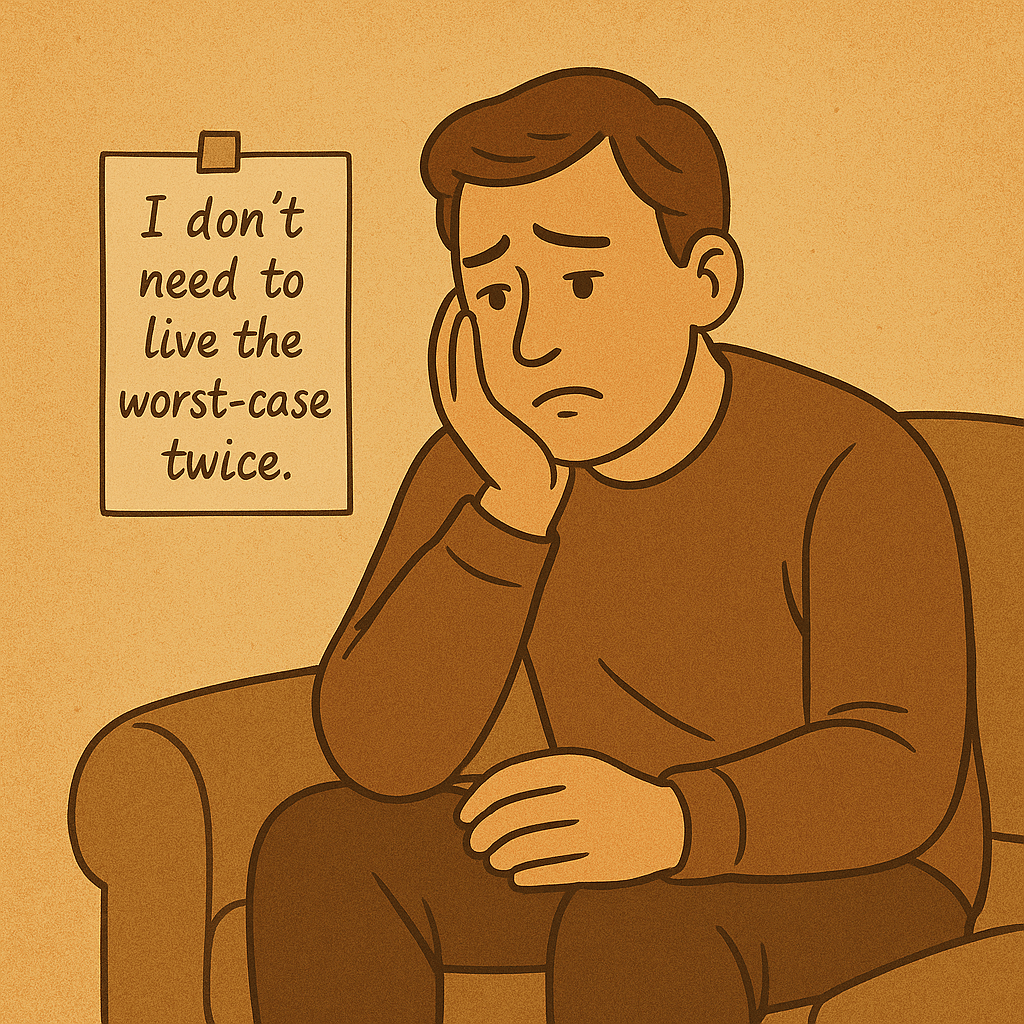
What is Catastrophizing?
Catastrophizing is a common thought pattern where the mind leaps to the worst-case scenario. It magnifies fear, imagining disasters that haven’t happened, and convinces us that something terrible is inevitable. In the context of grief, catastrophizing might sound like: “If I lost one person I love, I’ll lose everyone.” Or, “I’ll never be okay again.”
Why is Catastrophizing Detrimental to Grief?
While it’s natural for the grieving mind to feel unsafe, catastrophizing keeps you stuck in fear rather than present with your grief. It can prevent you from doing the important mourning work that allows healing to unfold.
Grief educator and author Dr. Alan Wolfelt identifies the Six Needs of Mourning that help us navigate loss. Catastrophizing can interfere with each of these needs:
- Acknowledge the reality of the death
- Embrace the pain of the loss
- Remember the person who died
- Develop a new self-identity
- Search for meaning
- Receive ongoing support from others
When catastrophizing takes hold, you may avoid feeling the loss, become consumed by imagined future tragedies, or withdraw from support. This adds another layer of suffering to the already painful journey of grief.
What You Can Do
Grief expert David Kessler offers practical steps to break free from catastrophizing and gently redirect your mind:
- Tell your mind that nothing actually has gone wrong. Remind yourself that the fearful scenarios aren’t happening right now.
- Find ways to calm yourself down. Practices like deep breathing, walking outdoors, listening to music, or grounding techniques can regulate your body and ease your mind.
- Reach out to someone you trust who isn’t going to catastrophize with you. Connection with a calm, supportive person can anchor you in the present.
- Look at your past pattern and do something different. If you tend to spiral, pause and choose a new response; write in a journal, call a friend, or shift your activity.
- Train your mind to think about the best scenario. Balance the worst-case thoughts by also imagining hopeful outcomes and meaningful possibilities.
Training Your Mind
One way to retrain the mind is to use lojongs. These are short, pithy statements designed to shift perspective. A Tibetan Buddhism tradition, they are used to “train the mind.” I write mine on index cards and place them around the house and my office. By periodically glancing at them, I give my mind repeated reminders to step out of my current way of thinking and move toward balance, hope, or acceptance. Over time, these small exposures really do help to rewire my thinking.
Here are some examples of lojong-style statements that can counter catastrophizing in grief:
- “Not every thought is true.”
- “Right now, I am safe.”
- “The future hasn’t happened yet.”
- “This pain is real, but it is not forever.”
- “Love still surrounds me.”
- “I don’t need to live the worst-case twice.”
- “I can meet what is here, not what might be.”
- “The story in my mind is not the whole story.”
- “This moment is enough to hold.”
- “Hope is allowed.”
By learning to notice and redirect catastrophic thinking, you give yourself the chance to be present with your grief, to honor your loved one, and to gently move forward in healing.
Why Noticing and Redirecting Catastrophic Thinking is a Good Thing
When we learn to notice catastrophic thoughts, we begin to separate grief itself from the added suffering of imagined tragedies. Redirecting these thoughts doesn’t mean denying your pain or pretending everything is fine. It means choosing not to let your mind live in fear of a future that hasn’t happened. By practicing this, you create space to stay with what is real right now: the love you carry, the memories you cherish, and the grief that honors your loss.
Over time, this practice strengthens resilience. Instead of being pulled deeper into fear, you develop trust that you can meet your grief without being consumed by “what-ifs.” This trust allows you to move forward with gentleness, openness, and hope, honoring your loved one while also giving yourself permission to keep living fully.
 Brad McMasters, Grief Educator & Coach
Leave a comment