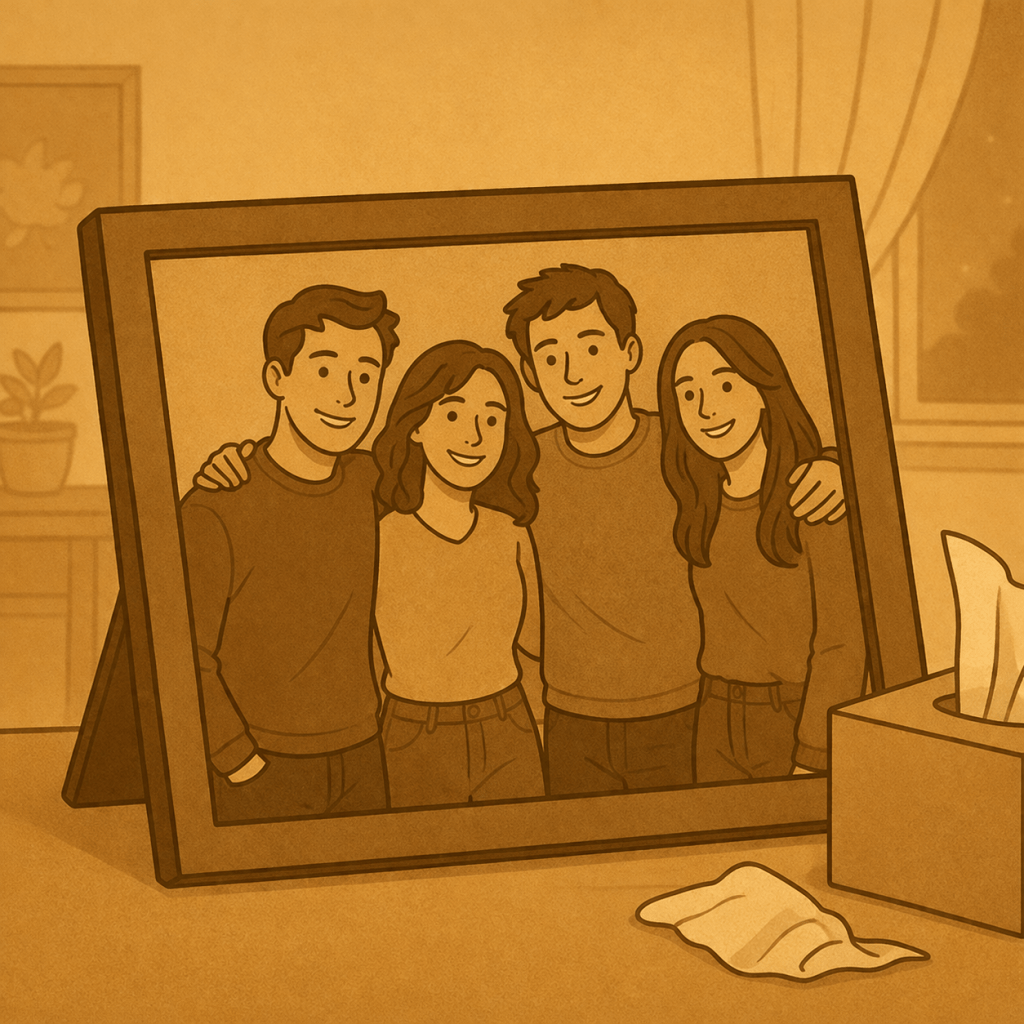
The Overlooked Grief of Sibling Loss
Dr. Mary Frances O’Connor, in her book, The Grieving Brain, highlights how our close relationships, are wired into our brains. Essentially, we form neural pathways that expect those loved ones to be there. It’s like our brains have a map of our social world and those closest to us are kind of built into that map. When we lose someone, especially someone as close as a sibling, it’s not just an emotional loss. In my case, when my older brother, Steve, died suddenly in a plane crash, the world fell out from underneath me. As the youngest of the family, all my older brothers had been a big part of my life for my entire life. They were supposed to be there. At 22, I was as connected to them as I was to my mother.
Disenfranchised Losses and Deferred Grief
The loss of a sibling, especially in adulthood, is often what is called a disenfranchised loss associated with a kind of grief that isn’t always fully recognized or supported by society in the same way as other losses. The attention, as you would expect, often shifts toward supporting the parents who have lost a child, or the spouse or children of the person who died. In addition, the adult siblings sometimes find themselves in the role of caretakers for their grieving parents, which can make their own grief feel a little sidelined. This can lead to deferred grief for the surviving siblings. In other words, they might end up putting their own grieving process on hold because they’re busy supporting others.
Sometimes sibling loss becomes disenfranchised not only by others, but by us. We may compare our grief to a parent’s, a spouse’s, or someone else’s pain and quietly conclude that our own loss matters less. When we do that, we can unintentionally deny ourselves the very thing that helps grief move and soften over time: authentic mourning. It is through mourning, the outward expression of grief, that we begin to reconcile the loss and learn how to carry it forward. And if that mourning did not happen when the loss first occurred, it is not too late. No matter how much time has passed, grief can still ask to be acknowledged.
I have a client in her early 70s who recently lost her husband. Her children encouraged her to meet with me because they felt she was not grieving. As we talked about earlier losses in her life, we came to the death of her brother, who died at eighteen when she was seventeen. She was not given permission to grieve. She was not allowed the “luxury” of sadness because her role became taking care of her devastated parents. This teenage girl handled funeral plans and many of the practical details that come with a death. The one person she reached toward for comfort was an older brother, but he was in the military and quite stoic. She remembered trying to hug him or be held by him, and it was not reciprocated. In that moment, she learned something many grieving siblings learn: I am on my own with this.
So she suppressed it.
That grief stayed largely untouched in her for nearly five decades until we began to speak about it together. At one point, I invited her to imagine her own daughter at seventeen, in the same position. I asked what she would want for that young girl. Without hesitation, she said she would want her daughter to be cared for, protected, and allowed to grieve fully. She would not want her carrying the emotional and logistical burden of everyone else’s sorrow. And in saying that, she was also, perhaps for the first time, giving that same permission to herself.
The Age at Which You Experience the Loss
The age at which you experience the loss of a sibling affects how you process it. While grief is always unique to the individual and shaped by many factors, there are some common ways it tends to show up depending on where you are in life.
For children and adolescents, grief often looks different than it does in adulthood. Younger children may not fully understand the permanence of death. Their grief can show up in behavior rather than words. They may become more clingy, regress, or ask the same questions over and over. As children move into adolescence, emotions can become more intense. There may be anger, withdrawal, or a desire to appear unaffected. At these ages, it can be especially difficult to find peers who understand the loss of a sibling. Because of this, it is often the presence of a caring, emotionally responsible, and understanding adult that helps a child or teen process the loss in healthy and authentic ways. When children are given safety, honesty, and permission to grieve, they are far more likely to carry the loss with support rather than silence.
For adults, the experience begins to take on different layers.
- Young Adult (18 to 28) At this stage of life, you are just beginning to form your identity and direction. The loss of a sibling can feel like a disruption to the life you thought you would share. There are often strong feelings of unfairness. Thoughts of what should have been. You may move forward with life in outward ways while grief quietly stays with you underneath it all. You have lost someone who knew you in your earliest becoming.
- Adult (28 to 40) Life often brings increased responsibility during these years. Careers, partnerships, and possibly children. Grief can become something you carry while continuing to show up for others. You may feel the absence of your sibling at important milestones. Holidays, family gatherings, and life events where they should be present. There can also be a growing awareness of your parents’ grief, and at times, you may find yourself supporting them while setting your own grief aside.
- Mid-age (40 to 60) By this point, your sibling has likely been a companion for most of your life. Losing them can feel like losing someone who helped shape your story. There is often a deep sense of shared history that is now altered. You may find yourself reflecting more on your own mortality. At the same time, you may be navigating the care of aging parents, which adds another layer to the grief. The family circle begins to feel smaller.
- Older Age (60 and beyond) Losing a sibling later in life can be quietly devastating. This is someone who has walked alongside you for decades. Someone who remembers your childhood, your family, your shared experiences in a way no one else can. Their absence can feel like a daily woe rather than an acute pain. Others may unintentionally minimize the loss, assuming that age makes it easier. It does not. In many ways, it can feel like losing a part of your own history, leaving you as the sole keeper of memories that were once shared.
No matter the age, grief does not follow a predictable path. These are simply patterns that many people experience. Your grief will take the shape that is true for you.
The Nature of the Loss
The nature of the loss can shape how we experience and process grief in profound ways. While every loss is unique, certain patterns often emerge depending on the circumstances surrounding the death. These patterns are not exclusive to sibling loss, but they can take on particular meaning within that relationship.
- Sudden or Traumatic Loss – In sudden or traumatic loss, there is often intense shock and difficulty accepting what has happened. A sense of unreality or disbelief can linger, along with strong feelings that this is not right or should not have happened. There may be regret over things left unsaid or unresolved. As a sibling, you may also find yourself supporting others in their grief, sometimes at the expense of fully processing your own.
- Short Illness – With a short illness, there is often a feeling of being unprepared for how quickly everything changed. There can still be regret over what was not said or resolved. You may have experienced a rapid shift from sibling to caregiver or witness, and the loss can include the sudden disappearance of the version of your sibling you have always known.
- Long Illness – In the case of a long illness, grief often begins before the death. There may be anticipatory grief, emotional exhaustion, and even a sense of relief when suffering ends, sometimes accompanied by guilt. You may find yourself grieving multiple losses along the way as your sibling changes over time and the relationship evolves.
- Old Age or Natural Causes – When a sibling dies in old age, the loss is often minimized because it was expected. Yet the grief can show up as a quieter, ongoing sense of absence. It may bring reflection on your own aging and mortality. As a sibling, this can also mean the loss of one of your shared history keepers, someone who has known your life’s chapters and development in a way no one else can.
- Suicide – In the case of suicide, there are often intense questions of why, along with feelings of guilt, responsibility, or missed signs. Anger, confusion, shame, and stigma can all be present. As a sibling, you may question your role and whether you could have done more, and the grief may be further complicated if mental health struggles created fractures in the relationship before the loss.
Birth Order and Family Roles
Sibling grief is shaped not only by who died, but also by the role that sibling held within the family. Birth order does not explain everything, of course, but it often influences family dynamics, expectations, and emotional roles. When a sibling dies, we are often grieving not only the person, but also the place they held in the family story.
- The oldest sibling is often experienced as a leader, protector, or trailblazer. They may have gone first through many of life’s stages and, whether intentionally or not, helped shape the path for the others. When the oldest sibling dies, the grief can include the loss of guidance, structure, or the one who always seemed a step ahead.
- The youngest sibling often holds a very different place. They may be experienced as the baby of the family, the one others felt protective toward, or the one who brought a certain energy or tenderness into the sibling group. When the youngest sibling dies, it can feel especially out of order, as if something about the natural rhythm of the family has been broken.
- Middle siblings often hold quieter but deeply important roles. They may be the peacemaker, the bridge, or the one who could move fluidly between personalities and relationships. Sometimes their importance is not fully recognized until they are gone and the family feels the shift in ways they cannot quite name.
And beyond birth order, family roles matter just as much. Some siblings are the funny one, the dependable one, the nurturing one, the troubled one, the one who stayed close, or the one who kept everyone connected. When they die, we are not only grieving their absence. We are grieving the role they played in the emotional life of the family.
My own brother is a good example of this. He was the second of four boys, and in many ways, he was the mellowest of all of us. He was seemingly the kindest. He was the one who seemed to have a close relationship with each one of us. So, for me, his death was not only the loss of my brother. It was also the loss of someone who helped hold a certain emotional tone in our family. His absence changed the feel of things. And that is part of sibling loss too. Sometimes we are grieving not only the person, but the way the family functioned because they were in it.
Shared History Keepers and Unique Perspectives
One of the often overlooked aspects of sibling loss is that siblings are frequently our shared history keepers. They are the people who knew us in the earliest chapters of our lives. They remember the family dynamics, the inside jokes, the homes, the holidays, the struggles, the strange little details, and the versions of us that existed long before adulthood. Even when siblings are very different from one another, they often hold a perspective on our life and family that no one else can fully replicate.
This is part of what can make sibling loss so particular and so painful. You are not only grieving the loss of a person you loved. You may also be grieving the loss of someone who held pieces of your origin story.
Parents, of course, carry memory too. But it is a very different perspective. A parent remembers you from above, in a sense, as the one raising, guiding, or watching over you. A sibling remembers you from beside. They were in it with you. They saw and experienced things through a similar lens, and that creates a kind of shared witness that is hard to replace.
This feels especially significant when there were only two siblings and one has died. In that case, the surviving sibling may now hold an entirely unique perspective on the family’s story. There may be no one else left who remembers certain events, emotions, tensions, or joys in quite the same way. That can create a very particular loneliness.
I was recently listening to Anderson Cooper’s podcast All There Is, in which he interviewed Ben Stiller. What struck me was not only the conversation itself, but the way Anderson and Ben seemed to share certain parallels in upbringing, culture, and family experience. They both grew up in New York City around the same era. They both had famous parents. There was a kind of overlap in perspective and lived experience. And it made me think about Anderson’s brother, Carter, who died by suicide when Anderson was just 20 and Carter was 22.
It made me wonder if there was a particular ache for Anderson in that conversation. Not only because he has experienced profound loss, but because for decades he has lived without one of his own shared history keepers. Stiller, himself, had his sister with whom he had shared memories as can be witnessed in the documentary, Stiller & Meara: Nothing Is Lost.
That is part of what sibling grief can carry. The sadness of losing not only someone you love, but someone who helped hold your past. Someone who knew the family from the inside. Someone who remembered the same chapters in a way that was uniquely yours together. And when that sibling is gone, especially if you are now the sole remaining sibling, there can be a quiet and profound grief in realizing that some memories are now yours alone.
Gender and Relationship Dynamics
Gender can also play a role in how we experience our relationship with a sibling and, in turn, how we grieve their loss. Of course, every relationship is unique, and not everyone fits into traditional patterns. But it would be incomplete not to acknowledge that gender roles, both spoken and unspoken, often shape how siblings relate to one another over time.
In some families, brothers may express connection through shared activities rather than conversation. Sisters may be seen as confidants or emotional supports. Some sibling relationships include a sense of protection, others companionship, others rivalry, and many are a blend of all of these. These patterns are not fixed, but they are often influenced by how we are socialized and what is expected of us within our families and culture.
When a sibling dies, we are not only grieving the person, but also the way we connected with them. If your sibling was someone you talked to about everything, you may feel the loss of that emotional outlet. If your connection was more activity-based or less verbal, the grief may show up in quieter or less obvious ways, sometimes making it harder for others to recognize or understand.
As a sibling, you may also notice differences in how you and others in your family grieve based on gender. Some may express grief outwardly, while others keep it more contained. Neither is right or wrong, but these differences can sometimes create misunderstanding or distance during an already difficult time.
Ultimately, gender is just one lens through which to understand sibling grief. What matters most is the unique relationship you had. The way you connected. The role your sibling played in your life. And the very personal way that loss continues to live in you.
Honoring and Representing Your Sibling’s Memory
One of Dr. Alan Wolfelt’s Six Needs of Mourning is to Remember the Person Who Died. I think this can be especially meaningful in sibling loss. For some of us, part of grieving a sibling is not only missing them but also feeling a deep need to carry them forward in some way. To honor them. To keep their presence alive. To make sure they are not forgotten. This can be a very healthy and authentic part of mourning.
Sometimes people assume that “moving forward” in grief means leaving the person behind or learning not to need them anymore. But often, healthy mourning asks something very different of us. It invites us to find meaningful ways to continue the bond. To remember. To speak their name. To carry their story. To let their life continue to matter.
For me, this has been one of the most enduring parts of losing my brother. After his death, I felt strongly compelled to maintain relationships with the people who were important to him. His ex-wife. His fiancée. His daughter. Even though life moved on and years passed, those connections mattered to me. They still do. At some level, I think staying connected to the people he loved was one way of staying connected to him.
I also recognize now that I have carried a quiet sense of representing him for much of my life since his death. At funerals, family reunions, and other significant moments, I often feel as if I am carrying not only my own presence, but his too. As if I am, in some small way, standing in for the life he did not get to keep living.
There is a term that fits this well: continuing bonds. It refers to the healthy and ongoing ways we stay connected to those who have died. And I think many grieving siblings understand this intuitively. We may keep telling their stories. We may bring them into the room in conversation. We may make choices that feel influenced by them. We may feel a responsibility to keep some part of them alive in the family or in the world.
For me, I think there was also something deeper at work. I eventually realized that it felt important, even necessary, for me to find meaning and even beauty after my brother’s death. Partly because I could see what it looked like when grief remained frozen and unresolved. But also, because I think I felt that to not do so would, in some way, disrespect him. As if fully living, loving, and finding meaning in the aftermath was part of how I could honor the fact that he no longer could. That may not be every sibling’s path, but it has certainly been part of mine.
For someone whose loss is more recent, or who feels stuck in their grief, this can be a gentle place to begin. Not by trying to “get over it,” but by asking: How might I honor this person? How might I continue the bond in a way that feels true and meaningful? Sometimes authentic mourning is not only about expressing pain. Sometimes it is also about learning how to carry love forward.
Conclusion
Sibling loss is often more complex and more significant than people realize. It can be overlooked, minimized, or misunderstood, even by those who care about us. But the loss of a sibling can touch nearly every part of our lives. Our identity. Our family roles. Our memories. Our sense of safety and continuity. And because of that, it deserves to be named, honored, and mourned.
There is no one way to grieve a sibling. The relationship may have been close, complicated, estranged, protective, playful, painful, or deeply meaningful in ways that are difficult to explain. Whatever the nature of that bond, the loss of it matters.
If you have lost a sibling, I hope you will give yourself permission to honor your own grief without comparing it to anyone else’s. Your loss does not have to be justified in order to be real. And your mourning does not need to look a certain way to be valid. My own experience of authentically mourning has been a 30+ year gift to myself and, in many ways, a way of honoring the life and legacy of my big brother.
I also hope you will find ways, in whatever feels true to you, to remember and carry the sibling you lost. To speak their name. To tell their stories. To recognize the place they held in your life and in your becoming. Because sibling loss is not only about who is gone. It is also about who helped shape you while they were here.
And if your grief still feels tender, unresolved, or even long ignored, it is not too late. There is still room to mourn. Still room to remember. Still room to honor both the sibling you lost and the part of you that lost them.
Resources for Further Support
Books
- Always a Sibling: The Forgotten Mourner’s Guide to Grieving a Brother or Sister – One of the few books written specifically for those grieving the loss of a sibling. It helps name the often-overlooked pain of sibling grief and can be especially validating for those who have felt unseen in their mourning.
- Everything Is Horrible and Wonderful: A Tragicomic Memoir of Genius, Heroin, Love and Loss by Stephanie Wittels Wachs – A powerful memoir written by a sister after the death of her brother. Honest, raw, and at times unexpectedly funny, this book may especially resonate with those navigating complicated grief or the loss of a sibling whose life was layered and complex.
- Healing the Adult Sibling’s Grieving Heart: 100 Practical Ideas After Your Brother or Sister Dies by Dr. Alan Wolfelt – A practical and compassionate resource specifically written for adults grieving a sibling. This one is especially useful for people who want not only validation, but also concrete ways to engage their mourning.
- I Have a Brother in Heaven by Autumn Doan – Intended form children aged 5-10, this is a book where children’s most popular questions are answered after the death of a sibling.
Websites / Online Resources/Social Media
- The Compassionate Friends – Best known for support after the death of a child or sibling. Some chapters offer sibling-focused spaces or can help direct people to age-appropriate support. It’s one of the better-known national grief organizations people turn to after sibling loss.
- The Dougy Center – Especially helpful if the surviving sibling is younger, or if an adult sibling is trying to support children or teens after a sibling death. A lot of online resources and direction for support.
- Death of a Sibling – Tender Hearts Group by David Kessler – A guided online support group specifically for those grieving the loss of a sibling. Led within David Kessler’s Tender Hearts framework, this group offers a structured yet compassionate space to connect with others who understand this often-overlooked grief. It can be especially meaningful for those seeking community, shared experience, and gentle guidance as they navigate life after the loss of a brother or sister.
- Helping Yourself Heal When an Adult Sibling Dies by Dr. Alan Wolfelt – A thoughtful and validating article that speaks directly to the often-overlooked grief of losing an adult sibling. Dr. Wolfelt offers compassionate guidance for understanding the unique pain of this loss and gentle encouragement for how to care for yourself as you mourn. I highly recommend any of Dr. Wolfelt’s books. Easy to read and tangible ideas for moving forward with your grief.
- Facebook Groups and Pages – Some people find it helpful to join these types of groups and to follow these pages to feel as if they are not alone. Others may have issues with hearing of others’ tragedies. I find them mostly positive. I belong to the groups Loss of a Sibling (14.6K members) and Sibling Grief Support Group – Loss of Brother or Sister (32K members). I also follow influencer Jameson Arasi.
Podcasts
- The Broken Pack™: Stories of Adult Sibling Loss – One of the best direct fits for your topic. It is specifically devoted to adult sibling loss and was created to give surviving siblings a space to share stories and feel less invisible.
- The Surviving Siblings® – Created after the host lost her brother to homicide. It centers the experience of surviving siblings and directly names how invisible this grief can be.
- Sibling Grievery – A more conversational and contemporary-feeling option. Good for people who want something personal, less clinical, and grounded in lived experience.
- All There Is with Anderson Cooper – A thoughtful and deeply human podcast exploring grief, memory, and the ways loss shapes our lives. While not specifically focused on sibling loss, Anderson Cooper brings his own experience into many of the conversations. He lost his brother to suicide when they were both in their early 20s, and you can often hear the layers of that loss throughout the series. Themes of disenfranchised grief, particularly the sense that he needed to care for his grieving mother, and the impact of deferred grief come up in meaningful and relatable ways. This podcast can be especially powerful for those who are trying to make sense of long-held grief and the ongoing relationship we have with those we have lost.
Movies/Series
- Ordinary People – A classic and one of the clearest portrayals of surviving sibling grief. It deals with shock, guilt, family silence, and the way one sibling’s death can alter the emotional structure of the whole family. This is probably one of the strongest examples if someone wants to see sibling grief portrayed directly. Community grief discussions often cite it as a standout for surviving-sibling grief.
- The Bear – This is actually a very strong modern example of sibling loss for adults. The show centers around grief after the death of a brother, and it captures so much of what can be true in sibling loss: unfinished business, loyalty, anger, love, identity, and the way grief can keep living in the family system long after the death. Many sibling grievers say it hit them unexpectedly hard.
- Somebody Somewhere – The series quietly and beautifully explores life after the death of a sister, and it does a particularly good job showing how sibling loss can linger in everyday life rather than always showing up in dramatic ways. It also gets at the loneliness and disorientation that can come with losing someone who knew you deeply. Some sibling grievers have said it felt very true to life.
 Brad McMasters, Grief Educator & Coach
Leave a comment