Brad’s Loss History
Intergenerational Trauma
The matriarch of our family was my great-grandmother Mabel, and I was fortunate to have her directly in my life for my first 15 years. Mabel was a wonderful woman, but her life was marked by great tragedy. When she was 25 and pregnant with her fourth child, her husband Thomas, my great-grandfather, tragically died by suicide. Mabel was left to raise her children as a single mother through the Great Depression, and she rarely spoke of Thomas and never of the manner of his death. Thirty years later, Mabel’s daughter Tommie Jean, my grandmother, also died by suicide. Mabel then adopted my mother and her four siblings. The nature of Tommie Jean’s passing was never spoken of by Mabel and only in whispers by others. Sixteen years later, I was born into a family where grief was a significant yet silent presence, which fostered deep empathy in me and an understanding of the complexities of grief.
Sudden & Tramautic Losses with Compounded Grief as a Child
At the ages of 11 and 13, I experienced the deaths of two very close family friends, Cimone and Rick, both teenagers and both in car accidents. At 14, Lance, a school friend was accidentally killed by another friend in a horrible accident involving a firearm. These traumatic and sudden losses of my young peers created compound grief over a short period of time. Experiencing the loss of close friends at a young age gave me profound empathy and an understanding of grief’s complexities, which I now bring into my work as a grief educator and coach. These personal encounters with loss have equipped me with the insight and sensitivity needed to support others in their unique grieving processes, helping them navigate their emotions and find paths to healing.
Anticipatory Grief of the Elderly
At 15, my beloved Mabel passed away at the age of 87. Though it was an anticipated loss, it was still very profound, and I miss her to this day.
Traumatic & Sudden Loss of a Sibling
The most traumatic sudden loss I’ve experienced was the death of my older brother Steven in a plane crash when I was 22 and he was 30. This loss rocked me to my core and changed the course of my life. From this tragedy, I have gained deep empathy and understanding of grief, enhancing my ability to support others in similar situations. The experience also fostered resilience and a greater appreciation for life, informing my approach as a grief educator and coach by providing insights into finding meaning and growth in the face of profound loss. Furthermore, a secondary loss was that of my mother, who never found her spark again after the loss of her son. I lost a large part of my mom on that day.
Anticipatory Grief & Loss of Parents
Losing my father, Russell, at 57 to a heart attack after a long history of cardiovascular issues, was deeply affecting. While his death wasn’t totally unexpected, the knowledge of his health challenges allowed me to experience anticipatory grief, which somewhat prepared me for the inevitable. At 27, with previous experiences of loss and a more mature understanding of life, I found myself better equipped to handle the grief. This age and experience provided me with coping mechanisms and a deeper understanding of the grieving process.
At 40, I received the greatest gift of my life, being the primary caregiver for my mother, Nancy, at the end of her life. After more than a year of intense treatment for lung cancer, she entered hospice care. I was there from the intake until her last breath, an incredible three-month journey. She was only 67. Witnessing the incremental loss of my mother, as her abilities and presence diminished, brought about a series of small, ongoing grief episodes. This profound and painful, yet beautiful experience inspired me to work in the hospice industry and ultimately led to my current role as a grief educator and coach.
Pet Loss
Losing Pepper, my loyal canine companion of 14 years, was a profound experience that marked the end of an era in my life. She journeyed with me from Portland to San Diego, Seattle, and finally Walla Walla, providing unwavering companionship through significant transitions. The loss was deeply felt, compounded by a sense of guilt as I reflected on parenting her during my less responsible years. Despite this, Pepper’s enduring presence and the memories we shared are a testament to the bond we had, making her absence all the more poignant. Pet loss is real and very impactful.
Current Losses & Mortality
My most recent significant loss was that of my dear father-in-law, Jim, also to cancer and also in hospice. As an in-law, we may experience disenfranchised grief as the relationship to the deceased is often not recongized or validated. With my one remaining parent, my mother-in-law, and with my remaining aunts and uncles, I cherish each moment.
Reaching an age where I’m beginning to lose contemporaries presents both challenges and benefits. The challenge lies in facing the reality of mortality more closely and frequently, which can bring about feelings of vulnerability, sadness, and a deepened sense of loss as I say goodbye to friends and peers. This stage of life also forces me to confront my own aging and the finite nature of life. However, these experiences can also be beneficial, fostering a greater appreciation for the relationships and time I have. They encourage me to live more fully and prioritize meaningful connections. Additionally, this phase of life provides valuable insights into the grieving process, enhancing my empathy and ability to support others going through similar experiences, thus enriching my work as a grief educator and coach.
-

Mabel, Misty and Brad – 1969 -
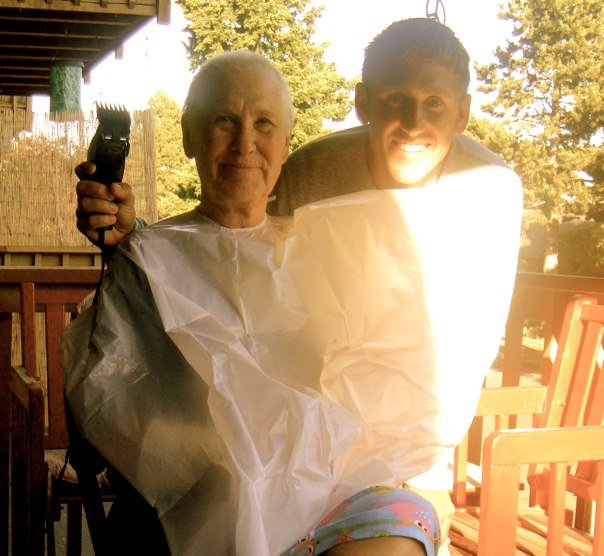
Brad shaving his mother’s head during her cancer treatment – 2009 -
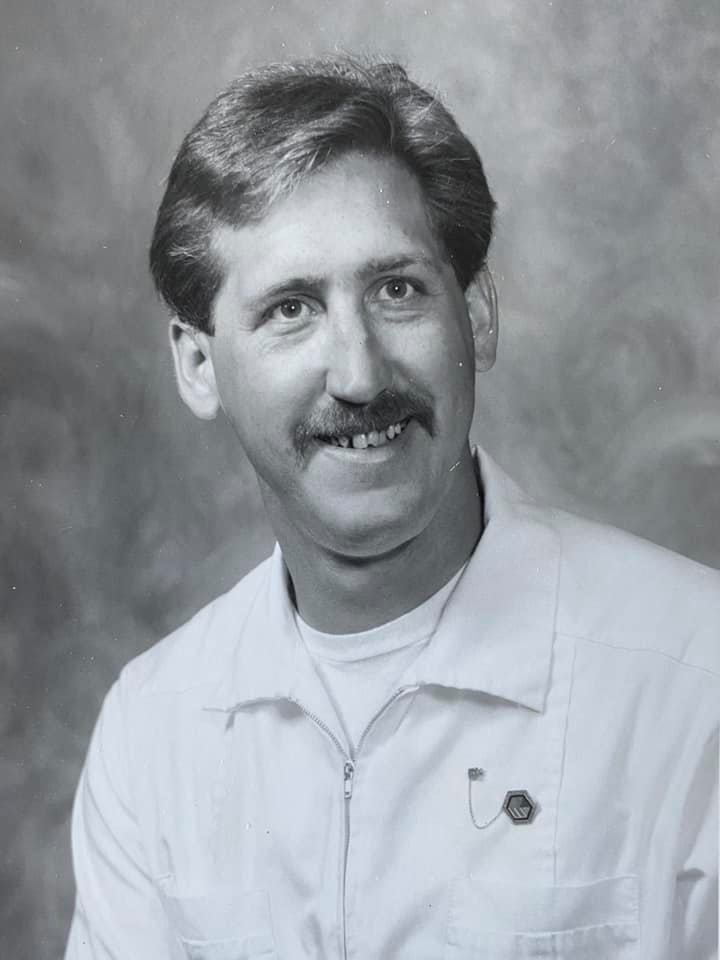
Brad’s older brother Steven upon graduation from Nursing School – 1990 -
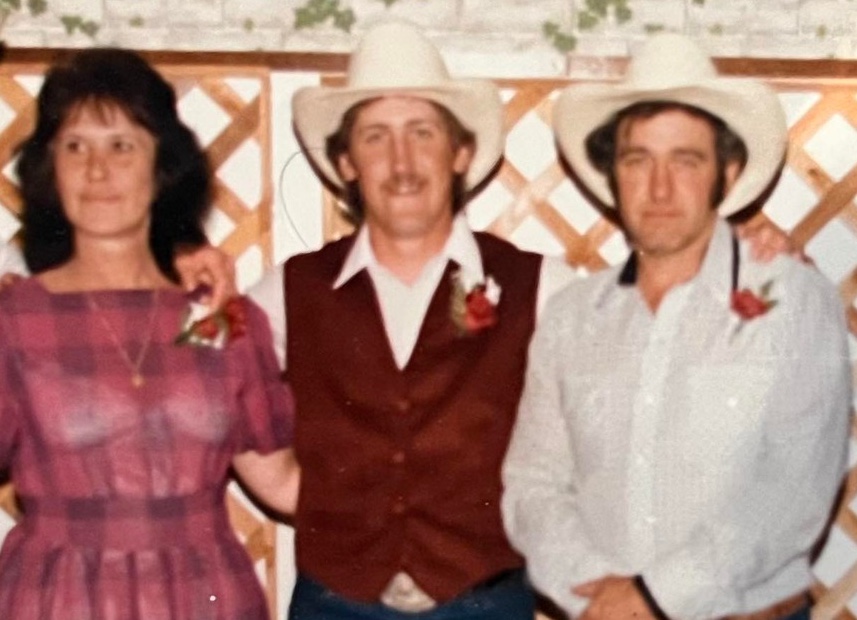
Brad’s mother Nancy, brother Steven, and father Russell on Steven’s wedding day – 1984 -
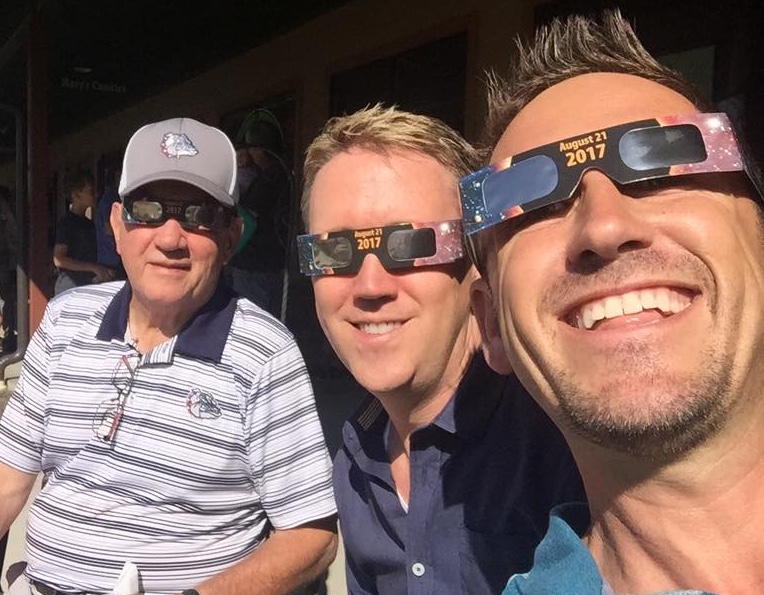
Brad’s father-in-law Jim, Brad’s husband Brian, and Brad during the solar eclipse – 2017 -

Brad and Pepper 1991
 Brad McMasters, Grief Educator & Coach